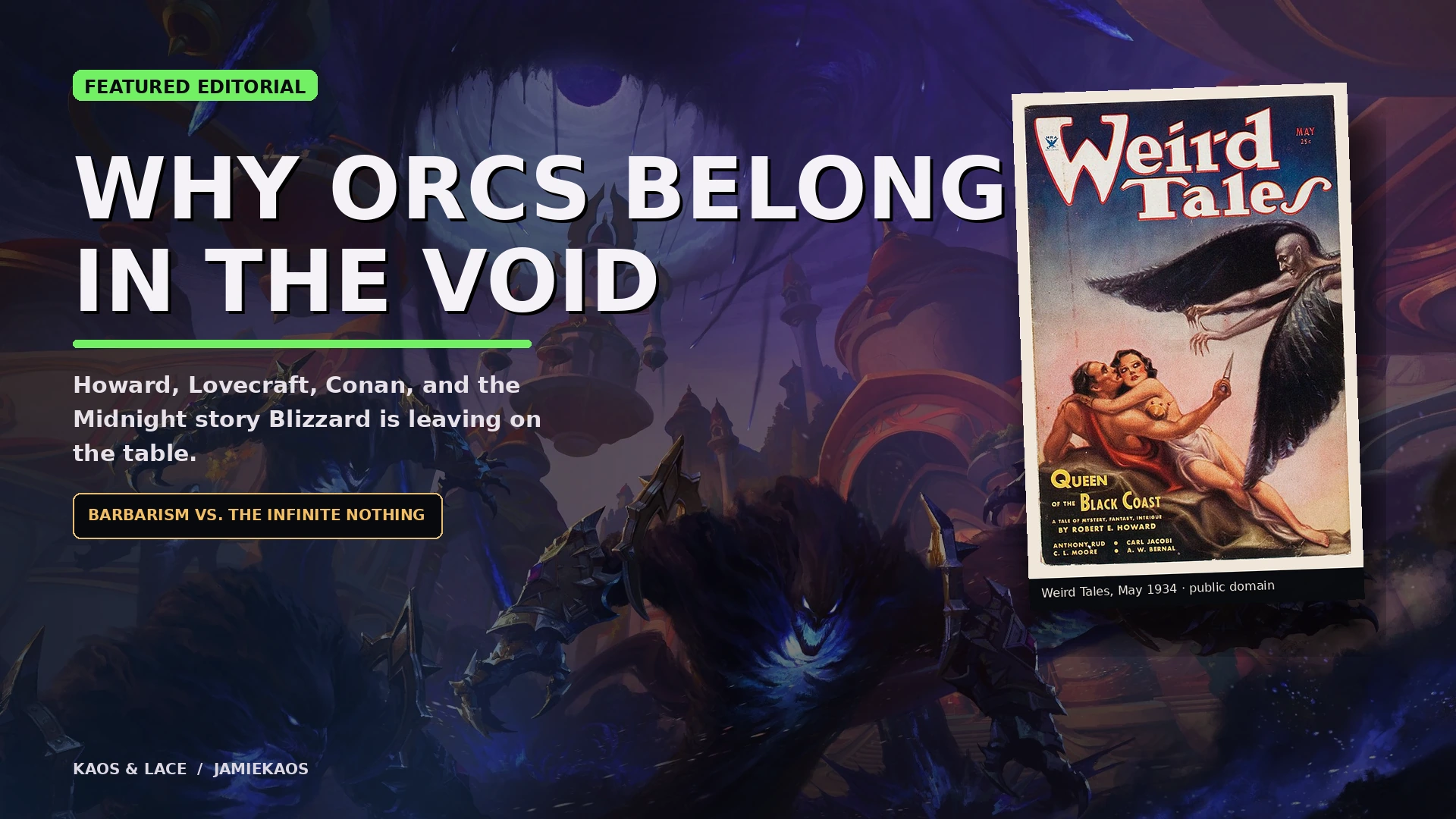
Apparently trolls with axes and wooden shields don't belong in a story about the Void. I've seen some version of that argument enough lately that it has started to piss me off. Because the axe is not the problem. The axe is the entire fucking point.
The argument usually goes that orcs feel too primitive, trolls feel too tribal, and Warcraft's more grounded cultures look out of place beside cosmic horror, ancient beings, and forces capable of tearing reality apart.
I understand where that feeling comes from. On the surface, it looks like a tonal mismatch.
It is also completely backwards.
To explain why, I need to talk about a guy who solved this problem ninety years ago and the argument he was having with the man who invented cosmic horror.
The axe is not the problem.The axe is the entire fucking point.
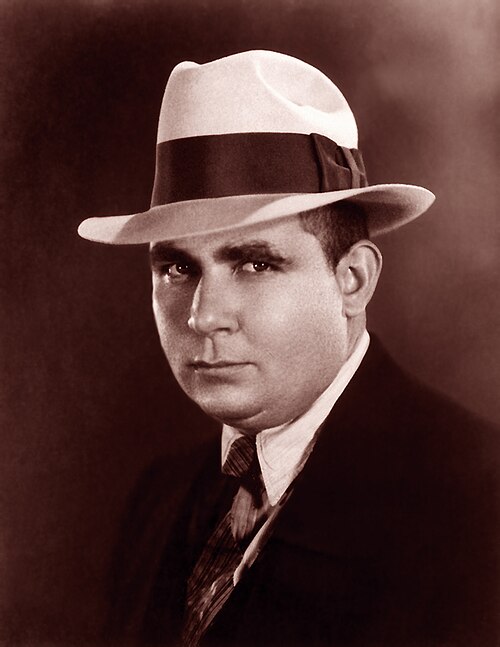
Robert E. Howard created Conan the Barbarian while writing pulp fiction in the 1930s. Most people know Conan from the Schwarzenegger movies, but Conan began as a series of short stories published in pulp magazines. Howard wrote more than twenty of them before tragically taking his own life at 30, and those stories helped create sword-and-sorcery as we understand it.
Howard was basically the godfather of the genre.
Sword-and-sorcery is not Tolkien.
There are no noble kingdoms holding back the darkness. There is no clear moral order and very little confidence that civilization is inherently good or even worth protecting. Howard's cities are fragile, decadent, and usually rotting from the inside. Kings are corrupt. Priests are dangerous. Scholars dig up things that should have stayed buried.
The people who endure are usually the ones connected to something older and more primal. People who understand survival on a gut level because their lives have always depended on it.
Howard did more than write barbarian adventure stories. He regularly dropped Conan directly into cosmic horror scenarios. Ancient wrongness. Alien entities. Forgotten cities. Forces so old and indifferent that human life barely registers beside them.
Conan works every single time.
He rarely understands what he is facing, and he does not need to. His identity is not built on a grand theory of how the universe works. It is not dependent on civilization making sense. He knows who he is because he has survived every attempt the world has made to kill him.
Howard shows you exactly what he means in The Tower of the Elephant. Conan walks through a city full of temples and philosophers, and Howard writes:
“He had squatted for hours in the courtyard of the philosophers, listening to the arguments of theologians and teachers, and come away in a haze of bewilderment, sure of only one thing, and that, that they were all touched in the head. His gods were simple and understandable; Crom was their chief, and he lived on a great mountain, whence he sent forth dooms and death. It was useless to call on Crom, because he was a gloomy, savage god, and he hated weaklings. But he gave a man courage at birth, and the will and might to kill his enemies, which, in the Cimmerian's mind, was all any god should be expected to do.”
Robert E. Howard, The Tower of the Elephant
Conan does not need the universe to be fair. He does not even expect his god to help him.
Crom gave him courage at birth. The rest is Conan's problem.
His identity is built on blood, survival, and a kind of will that does not ask permission to exist. There is very little for the darkness to take away from him because the darkness was already part of the deal.
The philosophy behind Conan becomes even more interesting when you know who Howard was working it out with in real time.
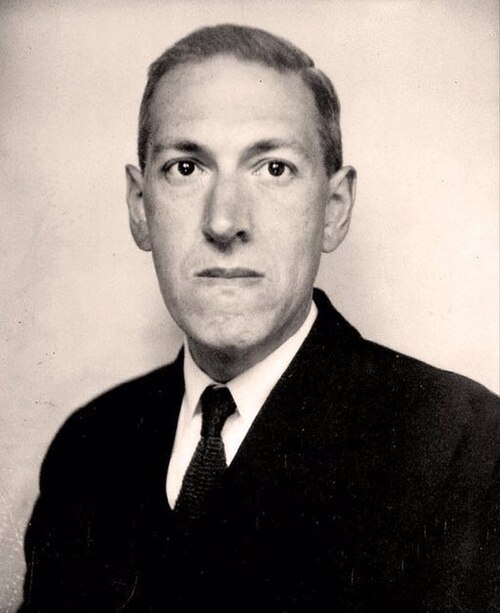
Howard and H.P. Lovecraft were pen pals. They wrote long, sprawling letters to each other from 1930 until Howard's death in 1936, arguing about history, literature, philosophy, politics, and the state of the world. They were both publishing in Weird Tales. They influenced each other's work.
Their correspondence began when Howard wrote to Weird Tales to praise Lovecraft's The Rats in the Walls and then immediately pointed out a historical error in it.
That was apparently Howard's opening move. Admiration and argument in the same breath.
That dynamic never really stopped.
At the center of their disagreement was civilization itself. Lovecraft believed civilized society represented the fullest expression of human potential. Civilization gave people access to art, philosophy, scholarship, and reason. The cultivated mind could experience more of what it meant to be human. Barbarism was a lesser state that humanity had rightly left behind.
Howard thought this was completely wrong.
He wrote:
“I am unable to rouse much interest in any highly civilized race, country or epoch, including this one. When a race is emerging from barbarism, or not yet emerged, they hold my interest. I can seem to understand them, and to write intelligently of them. But as they progress toward civilization, my grip on them begins to weaken, until at last it vanishes entirely, and I find their ways and thoughts and ambitions perfectly alien and baffling.”
Robert E. Howard, correspondence with H.P. Lovecraft
Howard was not trying to sound provocative.
Civilization genuinely felt alien to him. The primal felt real.
That disagreement becomes fascinating in the context of cosmic horror because Lovecraft's entire body of work is built around educated people discovering that the universe is vast, indifferent, and incomprehensible. His protagonists are scholars, antiquarians, scientists, and academics.
Then they spiral into madness.
The horror dismantles the rational framework they built their identities around. They believe knowledge will protect them, right up until knowledge reveals how small and meaningless they actually are. Once that framework collapses, there is often nothing underneath it.
Civilization, reason, and accumulated knowledge could not protect Lovecraft's characters from the darkness because those were the exact things the darkness attacked. Howard asked what would happen if you sent someone who was never wearing that armor in the first place and wrote Conan.
He put his answer plainly in Beyond the Black River:
“Barbarism is the natural state of mankind. Civilization is unnatural. It is a whim of circumstance. And barbarism must always ultimately triumph.”
Robert E. Howard, Beyond the Black River
These were two men publishing in the same magazine, thinking about the same darkness, and arriving at completely different answers.
Lovecraft sent the civilized mind into the Void and watched it shatter.Howard sent Conan in with a sword.
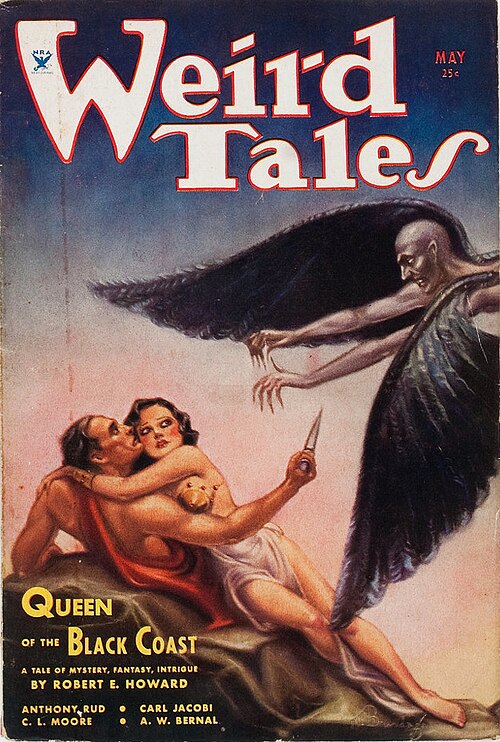
One of my favorite Conan stories is Xuthal of the Dusk, and once you understand what Howard was arguing with Lovecraft, its opening hits completely differently.
Conan and a woman named Natala are lost in the desert. They are out of water. There is no rescue coming and no path back.
Conan knows they are going to die.
He gives Natala the last of his water and silently prepares to kill her before the desert can take them both.
Howard writes:
“Endowed with all the barbarian's ferocious love of life and instinct to live, Conan the Cimmerian yet knew that he had reached the end of his trail. He had not come to the limits of his endurance, but he knew another day under the merciless sun in those waterless wastes would bring him down. As for the girl, she had suffered enough. Better a quick painless sword-stroke than the lingering agony that faced him. Slowly he slid the saber from its sheath.
He halted suddenly, stiffening. Far out on the desert to the south, something glimmered through the heat waves.”
Robert E. Howard, Xuthal of the Dusk
Conan has reached absolute zero. He has accepted the end.
Then he sees a city in the distance and something inside him simply refuses.
I cannot say exactly why that moment hits me so hard every time I read it, but I think it shows you everything Howard was trying to say. Even at the very bottom, with death already accepted, Conan does not dissolve. He does not lose himself. His grip on who he is never wavers for a second.
There is no civilized framework to shatter.
There is just Conan.
When he reaches Xuthal, that contrast becomes the entire story.
Xuthal is an ancient, dying civilization hollowed out by comfort, drugs, and decadence. Its people have become passive and completely disconnected from the reality around them. A monstrous god stalks the city and feeds on them, and they have largely accepted it as part of life.
One of them shrugs off the fact that a shadow creature is eating her people one by one and says:
“To every man his fate, and it's foolish to squeal like a rat in a trap. When Thog wants me, he will come for me.”
Robert E. Howard, Xuthal of the Dusk
These people have been hollowed out so completely that they now treat annihilation as normal. They are Lovecraft's protagonists after the framework has already collapsed. There is nothing left inside them to break because they surrendered a long time ago.
Then Conan walks through the gates.
He represents everything Xuthal has lost. Hunger. Violence. Instinct. The basic refusal to lie down and be consumed.
This is where the Warcraft comparison becomes interesting. Xuthal is not telling the same story as Midnight, but it is built around the same tension.
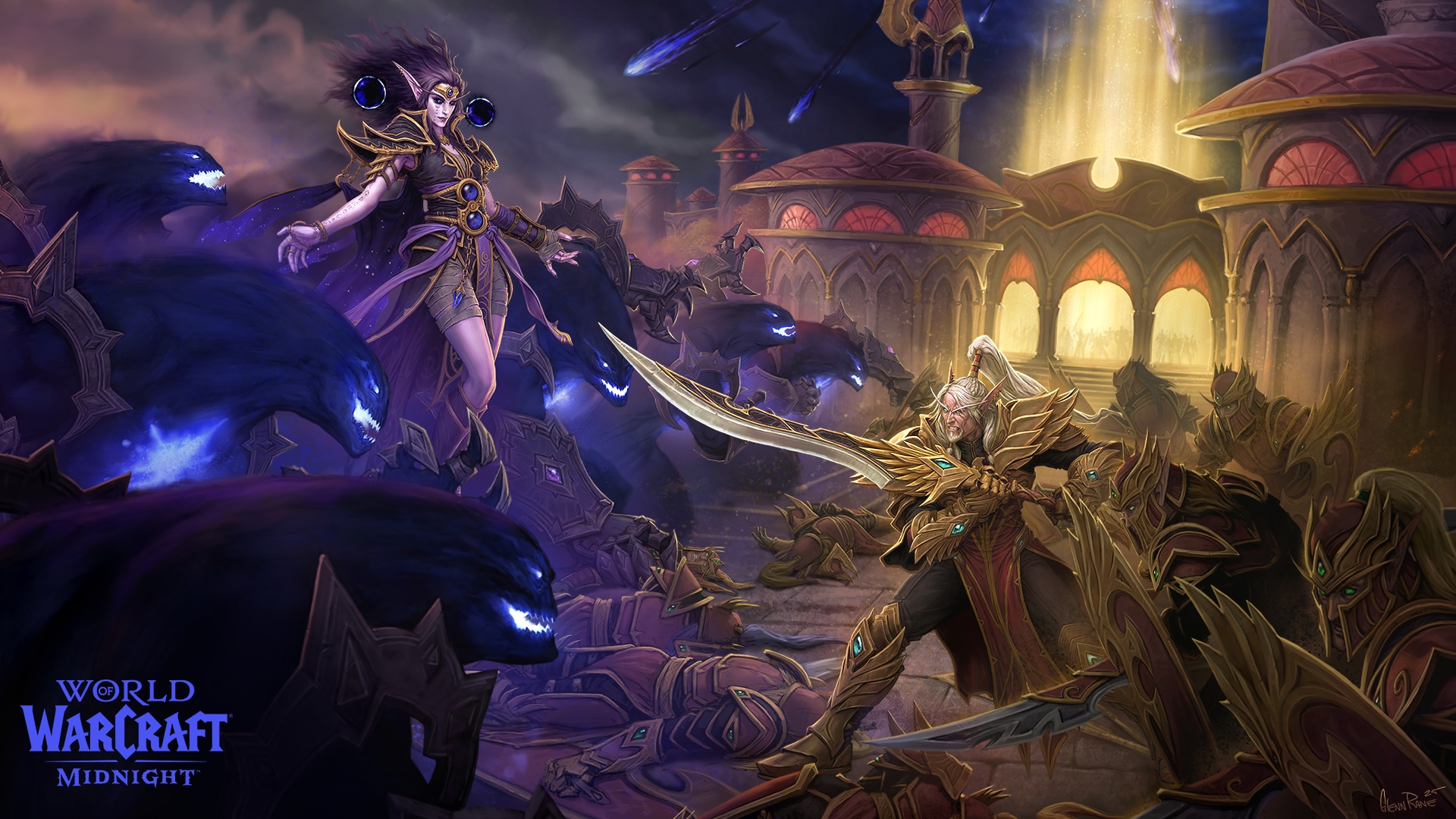
Think about what the Blood Elves actually are.
They are an ancient civilization built around magical dependency. When the Sunwell was destroyed, they became so desperate for arcane energy that they began draining magic from other sources just to function. Kael'thas took that desperation and used it to lead many of his people directly into the service of the Burning Legion.
That is the kind of civilizational weakness Howard kept writing about. The Blood Elves were insulated, dependent, obsessed with preserving what they had, and vulnerable because of it.
Midnight is finally forcing them to confront that history. The Dawnwell storyline is about the Blood Elves facing their dependency at the exact moment it is being weaponized against them.
Xal'atath is not randomly attacking their sacred site.
She is attacking the thing they have never been able to let go of.
The Blood Elves belong at the center of Midnight. Their story makes complete sense.
But the cultures representing the other side of Howard's argument have mostly been left outside.
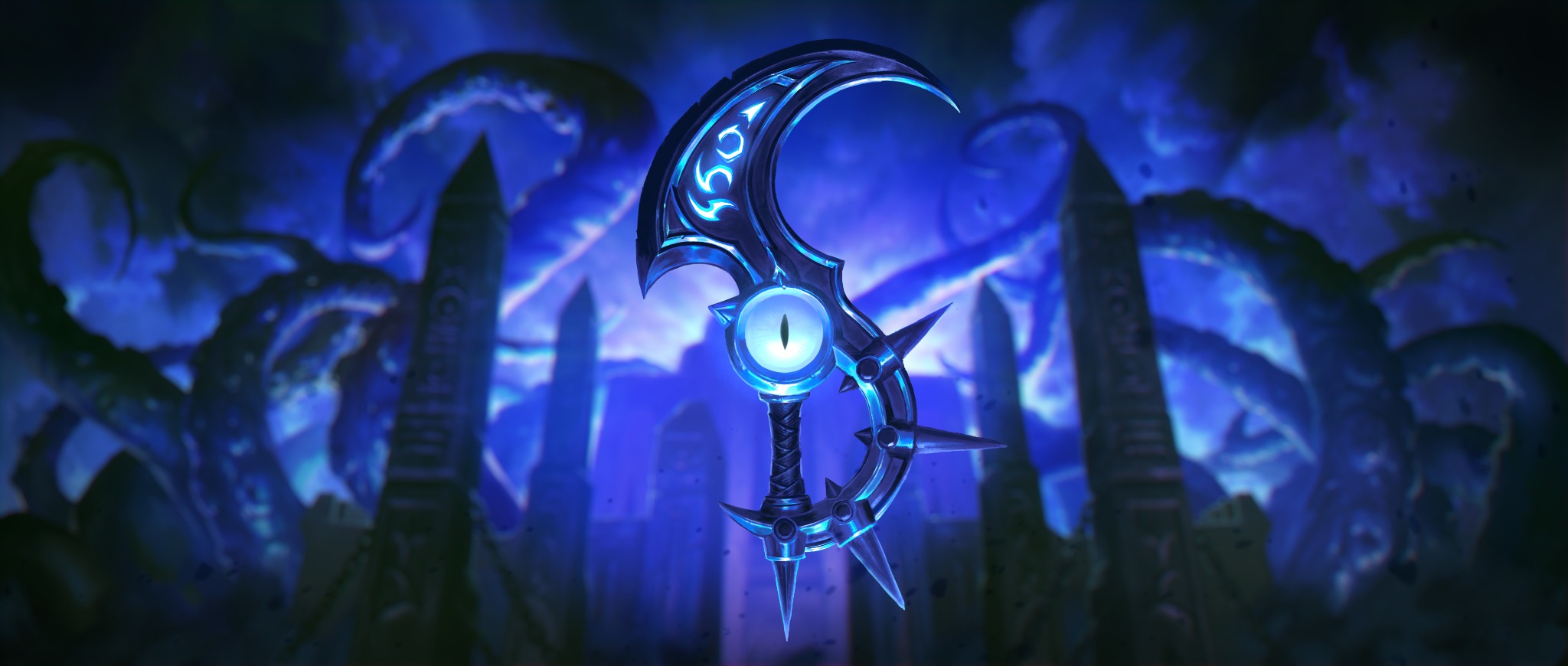
Cosmic horror does not only work by presenting something physically overwhelming.
It finds the thing your identity is built around and pulls it apart.
It makes you question what you saw, what you know, and whether any of it matters against something that vast and indifferent. It reveals that the rules you trusted were never real, your civilization was never important, and the universe does not care whether you survive.
The Void in Warcraft works the same way.
It whispers. It reframes. It finds uncertainty and turns it into a new version of reality. It finds the exact point where your understanding of yourself becomes vulnerable and keeps pushing until you can no longer trust your own mind.
Xal'atath is not only a conqueror. She is a strategist. She spent multiple expansions positioning herself to strike Quel'Thalas at the point where it was least capable of defending itself.
The Sunwell is power, history, faith, identity, and dependency concentrated into one place.
Of course she went after it.
Once you understand that, the question of which cultures belong in this story changes.
The most compelling person you can place inside cosmic horror is someone the horror has to approach differently. Someone who does not expect reality to be orderly or kind. Someone whose identity is rooted in things that cannot be disproved by revealing one more terrible truth about the universe.
That is Conan.
In Warcraft, that is where orcs and trolls become interesting.
Orcs and trolls are not immune to corruption.
Their histories make that impossible to argue.
The orcs willingly drank the blood of Mannoroth. They accepted power from a force they did not understand because they wanted the strength it offered. The bargain turned them into weapons, enslaved them to the Legion, and nearly destroyed everything they were.
Grommash Hellscream made that choice twice.
His first choice helped damn his people. The second time gave him the power to kill Cenarius. He knew the blood was corrupting him and drank anyway because he believed he needed what it offered.
Then he died killing Mannoroth and breaking the curse.
That is not immunity.
It is something more interesting.
It is a story about choice, consequence, guilt, and the decision to break the thing you once embraced.
Garrosh follows the same pattern.
Garrosh drew power from the Heart of Y'Shaarj, but it did not invent a new Garrosh from nothing. It amplified what was already there. His pride. His rage. His certainty that strength gave him the right to decide the future of the Horde.
Garrosh did not stumble into the Heart without understanding that it was dangerous. He dug it out of Pandaria and used it because he believed he could control it.
That distinction matters.
The Void does not have to convince an orc that the universe is brutal.It has to convince him that one more bargain will finally give him enough strength to beat it.
Trolls present a different version of the same problem.
A troll witch doctor's relationship with the spirit world is not theoretical. The loa are part of history, ritual, family, politics, and daily life. Trolls know that gods exist because their gods answer back.
That connection grounds them.
It also gives the Void a way in.
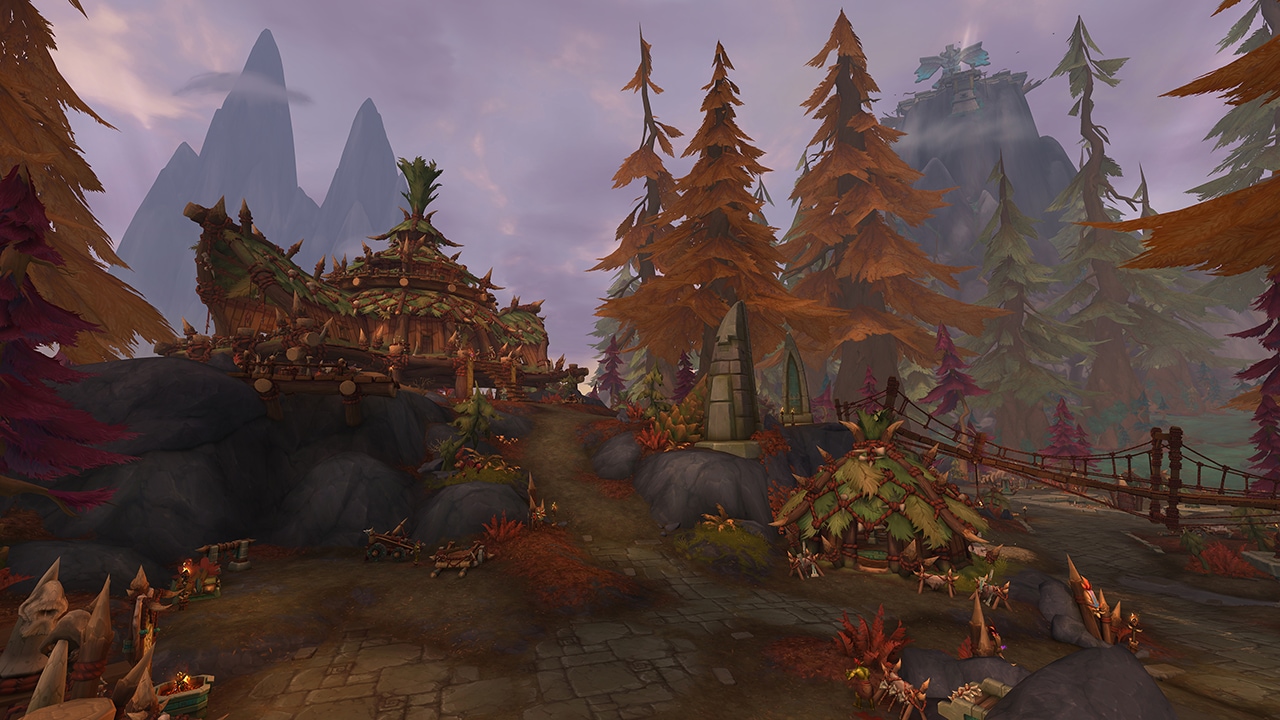
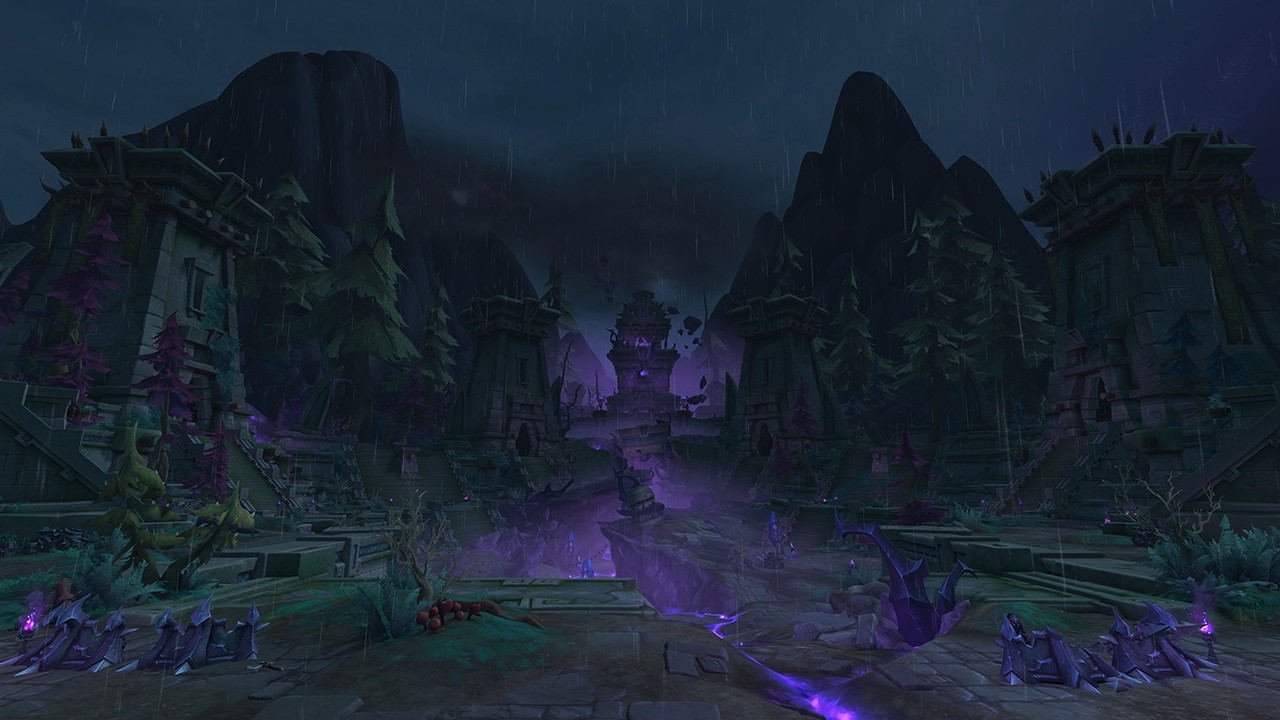
Trolls have followed false prophets. They have worshipped powers presented as gods. They have watched loa become corrupted, manipulated, and consumed. Their spiritual certainty does not make them invulnerable. It gives an enemy something sacred to imitate.
The Void does not have to convince a troll that gods are real.
It has to convince them that the voice answering is one of theirs.
That is where the story becomes good.
The spiritual connection is both the anchor and the vulnerability. The Void cannot simply arrive and announce that reality is meaningless. It has to poison something the trolls already love. It has to twist tradition, impersonate authority, and turn faith against the people who carry it.
Orcs and trolls can fall.
They have fallen before.
The difference is that their stories of corruption are rarely about discovering that the universe is darker than they thought. They already knew the universe was dark.
Their stories are about what they are willing to do in order to survive it.
That gives them something important to bring into Midnight. They understand the bargain because they have taken it. They understand the lie because they have believed it. They understand that corruption does not always begin when some outside force overpowers your mind.
It finds the ugliest part of it and tells you that part was right all along.
Midnight is doing a lot right.
The tone is dark. The stakes feel real. The Void feels threatening in a way it has not in a while, and I have been genuinely excited playing through it.
I understand why the campaign is focused where it is. The story is built around uniting the scattered elven factions to defend the Sunwell. Quel'Thalas is the setting. The Blood Elves have a complicated history with magical dependency, corruption, and forces they believed they could control.
Xal'atath spent multiple expansions positioning herself to exploit that history.
It is a natural story hook. Honestly, it is exactly the kind of setup Howard would have written. Put the civilization with the deepest dependency directly in the path of the thing that wants to consume everything.
The problem is that the cultures on the other side of Howard's argument are barely involved.
The Amani appear and Zul'Aman receives an entire zone, which I think is genuinely great. But the Orcs, Tauren, and broader Horde remain on the edges of a conflict that fits their history perfectly.
The Void is trying to dissolve identity, consume meaning, and pull everything into an infinite nothing. Put that against people whose entire history is built around surviving the end of the world.
Orcs survived genocide, enslavement, exile, demonic corruption, and the destruction of their homeworld. They are still here.
Troll empires have risen, fractured, and collapsed for thousands of years. Their gods have died. Their sacred places have burned. They are still here.
They are not pure.
They are not immune.
They are people who have made terrible bargains, survived the consequences, and carried those failures forward as part of who they are.
What does Xal'atath whisper to an orc whose people have already been lied to by shamans, demons, gods, and their own leaders?
What can she promise someone whose ancestors already accepted power and watched it destroy their world?
What happens when she speaks to a troll through the voice of something they have worshipped for generations?
What happens when they know it might be a lie and still desperately need it to be true?
That is the ideological collision Midnight should be reaching for.
The current conflict is heavily framed through Light and Void. That works, but Warcraft has another axis available. It has cultures that do not answer cosmic nihilism with another cosmic force.
They answer it by surviving.
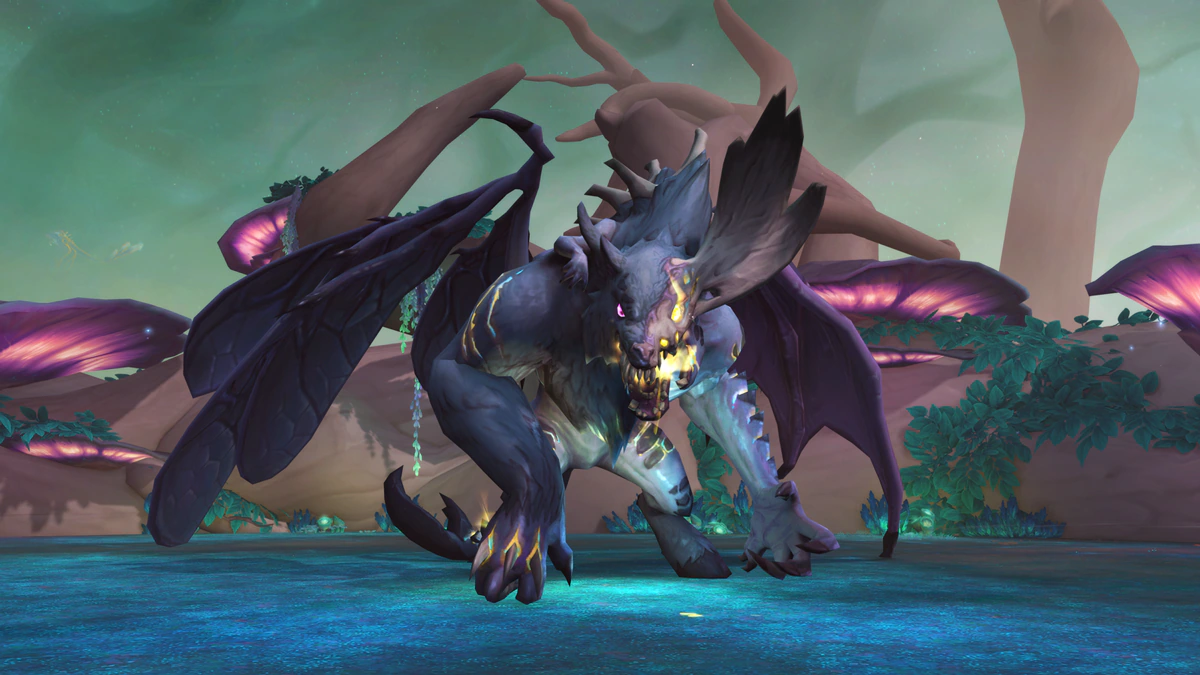
The signs are already there that Blizzard understands at least part of this. The Amani story is not finished. There are mysteries surrounding their loa, the lands beyond Zul'Aman, and whatever Xal'atath's presence has disturbed.
The groundwork exists.
The question is whether Blizzard will push it far enough.
Because the Horde should not enter this story merely as another army sent to defend Quel'Thalas. Its oldest cultures should bring an answer to the Void that nobody else can.
Barbarism versus the infinite nothing.
Howard worked out the formula almost a hundred years ago in direct argument with the man who invented cosmic horror. You take the most primal, grounded thing you have and place it in front of something that wants to erase everything.
Then you watch what happens.
Primary reading
- Robert E. Howard, The Tower of the Elephant (1933)
- Robert E. Howard, Xuthal of the Dusk (1933)
- Robert E. Howard, Beyond the Black River (1935)
- Robert E. Howard and H.P. Lovecraft correspondence, 1930–1936
Historical images
- Robert E. Howard portrait, public domain in the United States
- H.P. Lovecraft portrait, public domain in the United States
- Weird Tales, May 1934 cover, public domain in the United States
Warcraft imagery
- Official Blizzard Zul'Aman zone overview
- Official Blizzard Midnight launch coverage
- Additional official Blizzard screenshots bundled with Kaos and Lace's Midnight guides
World of Warcraft, Warcraft, and Blizzard Entertainment are trademarks or registered trademarks of Blizzard Entertainment, Inc. Kaos and Lace is not affiliated with or endorsed by Blizzard Entertainment.